
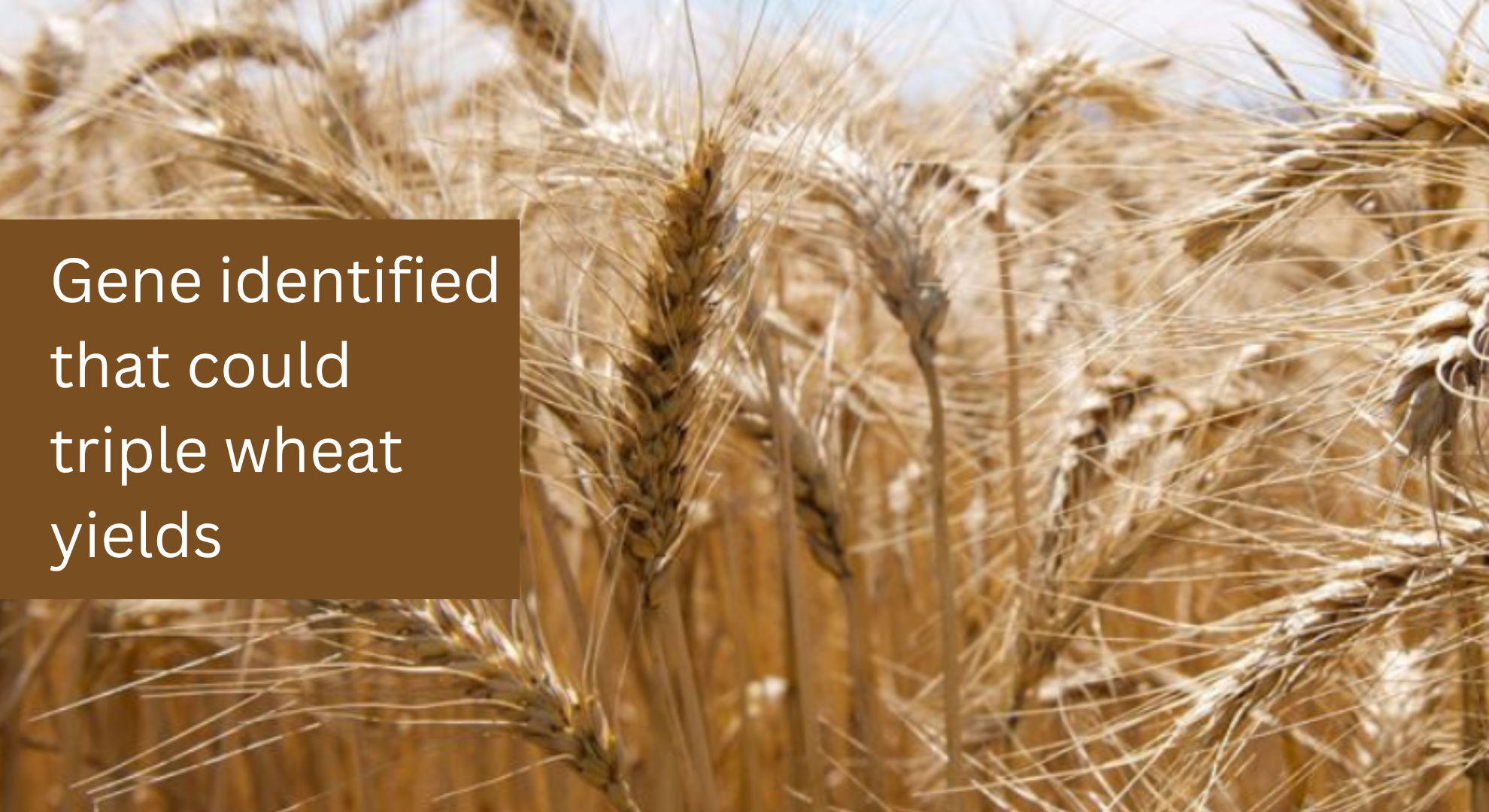
Australian researcher Dr Scott Boden at the University of Adelaide is part of the international team that has discovered a gene that makes wheat grow 3 ovaries per flower instead of one. Producing additional ovaries corresponds to an increase in grains per spike, potentially delivering substantial yield gains on existing cropping land.
The triple-ovary-per-flower mutation was observed in a common bread wheat, so the research team mapped the multi-ovary wheat’s DNA and compared it with regular wheat. They found that the normally dormant gene WUSCHEL-D1 (WUS-D1) was ‘switched on’ in the multi-ovary wheat, allowing it to produce extra female parts early in the flower development process of the plant growth cycle.
“Pinpointing the genetic basis of this trait offers a path for breeders to incorporate it into new wheat varieties, potentially increasing the number of grains per spike and overall yield,” says Vijay Tiwari, Associate Professor of Plant Sciences at the University of Maryland, US, and co-author of the study.
“By employing a gene editing toolkit, we can now focus on further improving this trait for enhancing wheat yield. This discovery provides an exciting route to develop cost-effective hybrid wheat.”
Wheat is one of the world’s staple crops responsible for feeding billions every day. This discovery could be a powerful tool to improve global food security.
According to researchers, the discovery of this gene could also lead to the development of similar multi-ovary varieties of other grain crops. This research was published in the ‘Proceedings of the National Academy of Sciences’ and included funding support from a number of organisations, including the Australian Research Council.
Boosting plant pest defences
Researchers are looking to implement gene-editing techniques to restore the natural plant defences of high-starch crops such as maize, peas and beans. Wild plants naturally produce types of inhibitor proteins in their seeds, which make them indigestible to pests such as weevils, beetles and woodworms. Domesticated plants exhibit fewer of these inhibitor proteins, and this may be the result of efforts to increase their productivity and digestibility for human consumption. These proteins, known as alpha-amylase inhibitor proteins, are now the focus of an international research project.
Gene editing, using the technique known as CRISPR and its variations, gives us the possibility of increasing the production of these inhibitors or making them more active in plants of interest
Dr Marcos Fernando Basso is a researcher from the Brazilian Agricultural Research Corporation and the Genomics for Climate Change Research Center. This is early-stage research, with the next steps to test whether increased inhibitors affect quality, safety and the end-use of products. He says this discovery may provide a promising pathway for plant breeding in the coming years.
Fiona Simson at the helm of Australia’s Biotech Council
The Agricultural Biotechnology Council of Australia (ABCA) has appointed Fiona Simson as its new Chair. As Vice-President of the World Farmers’ Organisation and former President of the National Farmers’ Federation, Ms Simson brings extensive leadership and experience in advancing science-based farming policy in Australia and internationally.
Read the full article https://bit.ly/4sV7rt3
Source GROUNDCOVER | GRDC


