
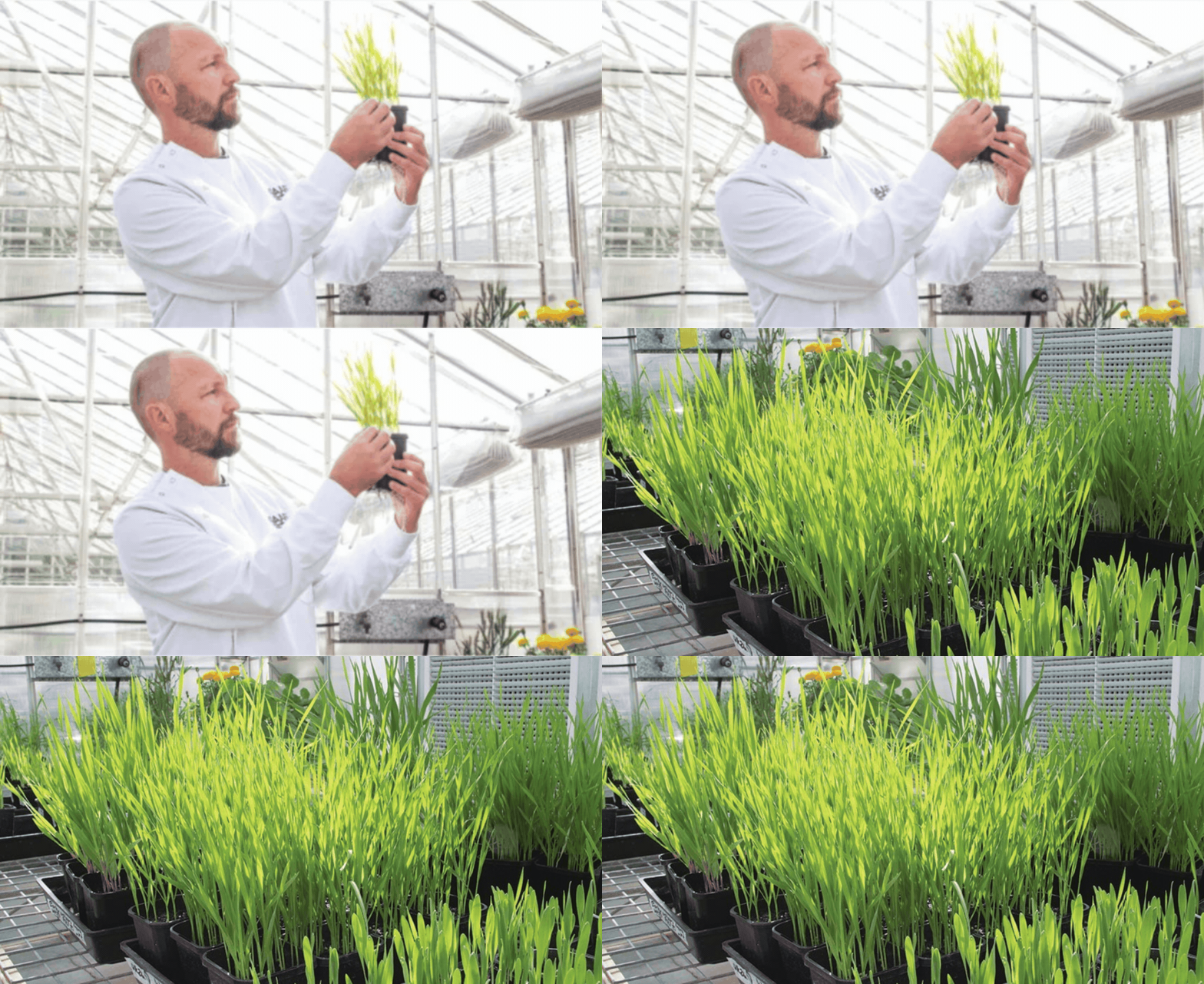
Glasshouse trials are underway to validate a 3-in-1 approach to control viral diseases of grain crops. The non-GM approach is applied as a spray designed to block viruses from replicating, boost plant immunity and target insect vectors such as aphids.
An innovative new approach to protecting crops from viral diseases by activating plants’ natural defences could significantly reduce the reliance on insecticides to control the insect vectors.
A University of Queensland team, led by Dr Karl Robinson, is validating the technology in glasshouse trials. The approach disrupts the disease cycle at 3 key leverage points: boosting plant immunity, disrupting viral replication, and targeting the insect populations that transmit the virus.
The concept came to light when Dr Robinson deliberately set out to induce plant defences without the use of gene modification (GM) technologies. “While GM has been used successfully to combat viruses in high-value crops such as cotton, it can be viewed controversially and may also be subject to costly regulatory restrictions,” he says.
Instead, we asked: what if we could mimic the virus protection seen in GM crops but without altering the plant’s genome?
The viral threat
Trials to work up this technology targeted the ‘yellow viruses’. These included barley yellow dwarf virus (BYDV) and turnip yellows virus (TuYV). These cause significant grain yield and grain quality losses.
“What makes these infections particularly damaging is their stealth,” says Dr Robinson. “Symptoms are subtle or entirely absent and often mistaken for nutrient deficiencies, making diagnosis and timely treatment difficult.”
Since these viruses are spread primarily by aphids, insecticides are used to manage the diseases. Aphids, however, are developing resistance. This is a familiar cycle – increasing chemical use and costs while lowering returns as the targeted organism uses its genetic resources to evade the chemical mode of action.
Consequently, Dr Robinson and his team are looking for new tools to protect yields, profitability and sustainability.
Natural defences
One of the most powerful ways that plants defend themselves against viruses is called RNA interference (RNAi). It works by detecting and silencing the RNA molecules produced when viral genes are expressed.
The RNAi mechanism is present across plant and animal kingdoms, often to help regulate gene expression. In plants, however, it doubles up as part of the immune system.
The university team is targeting viruses that produce distinctive RNA structures when they replicate. The distinction relates to the number of molecular strands. DNA typically involves 2 strands (that coil around each other in a double helix), normal RNA molecules are single-stranded.
The viruses targeted by plant defences stand out because they are double-stranded RNA (dsRNA).
“When the plant detects these unusual double-stranded RNA, it recognises it as a threat and activates a defence response,” Dr Robinson says. “The plant produces proteins that break down the viral RNA, effectively stopping the virus from multiplying.
While GM has been used successfully to combat viruses in high-value crops such as cotton, it can be viewed controversially and may also be subject to costly regulatory restrictions. Instead, we asked: what if we could mimic the virus protection seen in GM crops but without altering the plant’s genome?
Natural defences strengthened
Despite being powerful, RNAi can be overwhelmed. Viruses are always evolving and some can suppress or evade the plant’s defences. As such, Dr Robinson wanted to take a ‘whole system approach’ that disrupts the virus’s replication process at 3 levels: the plant, the virus and the insect vector. The aim is to break the virus life cycle rather than just respond when an infection is underway.
The technology platform deployed has the ability to make double-stranded RNA molecules synthetically and to order. This avoids the need to introduce genes into the plant as the source of the interfering dsRNA. Instead, the dsRNA concoction is sprayed directly onto plants.
Dr Robinson’s team has designed specific dsRNA molecules to mount a 3-tiered attack to:
- stop the virus replicating in the plant
- prevent the virus from being transmitted by aphids
- target essential genes in aphids themselves to reduce pest populations over time.
“This approach doesn’t just protect crops from immediate threats, it also works to break the virus’s life cycle and reduce its spread between plants, while lowering insect population numbers,” Dr Robinson says.
Since both plants and aphids can be targeted this way, a startling new possibility may be on the horizon:
What is exciting about this research is its potential to lessen, and perhaps one day eliminate, reliance on insecticides.
Looking ahead
Researchers in a broader collaborative team are already at work to bring a new generation of crop protection technologies to growers. Included are Dr Ben Congdon of the WA Department of Primary Industries and Regional Development, Dr Piotr Trebicki of Macquarie University and Dr Murray Sharman of the Department of Primary Industries – Queensland.
The dsRNA strategy is attractive as it offers a new generation of benefits – reduced reliance on chemical insecticides plus yield and crop quality gains that are achieved with lowered input costs. Dr Robinson notes that while RNAi technology is not yet commercially available in Australia, glasshouse trials are paving the way to field trial work.
“The potential is clear: a safer, smarter and more sustainable way to protect crops from emerging threats,” he says. “If successful, RNAi-based crop protection could help to further align Australian grain production with environmentally sustainable practices that nonetheless help growers by improving profits.”
More information: Dr Karl Robinson, Queensland Alliance for Agriculture and Food Innovation, University of Queensland, k.robinson2@uq.edu.au


